
Account Takeover (ATO)
When fraudsters become the customer
Account Takeover (ATO) occurs when criminals gain access to a legitimate customer's account using stolen credentials, phishing, malware, social engineering, SIM swaps, or remote access tools.
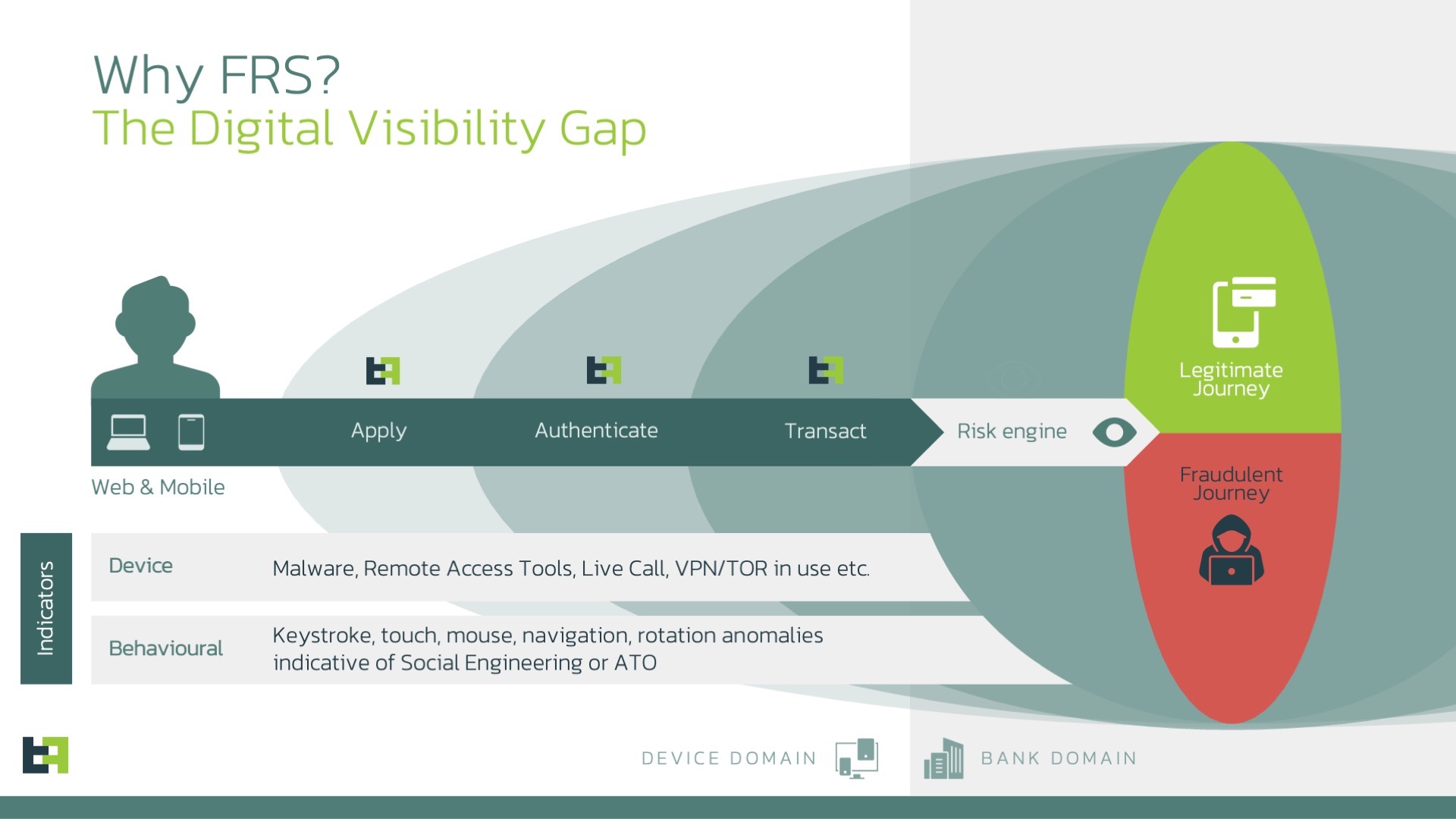
The challenge is that modern fraudsters often appear legitimate. They may possess valid credentials, pass authentication checks, and successfully navigate digital banking journeys.
Traditional controls focus on whether access is authorised. ThreatFabric focuses on whether the person behind the session is truly the customer.
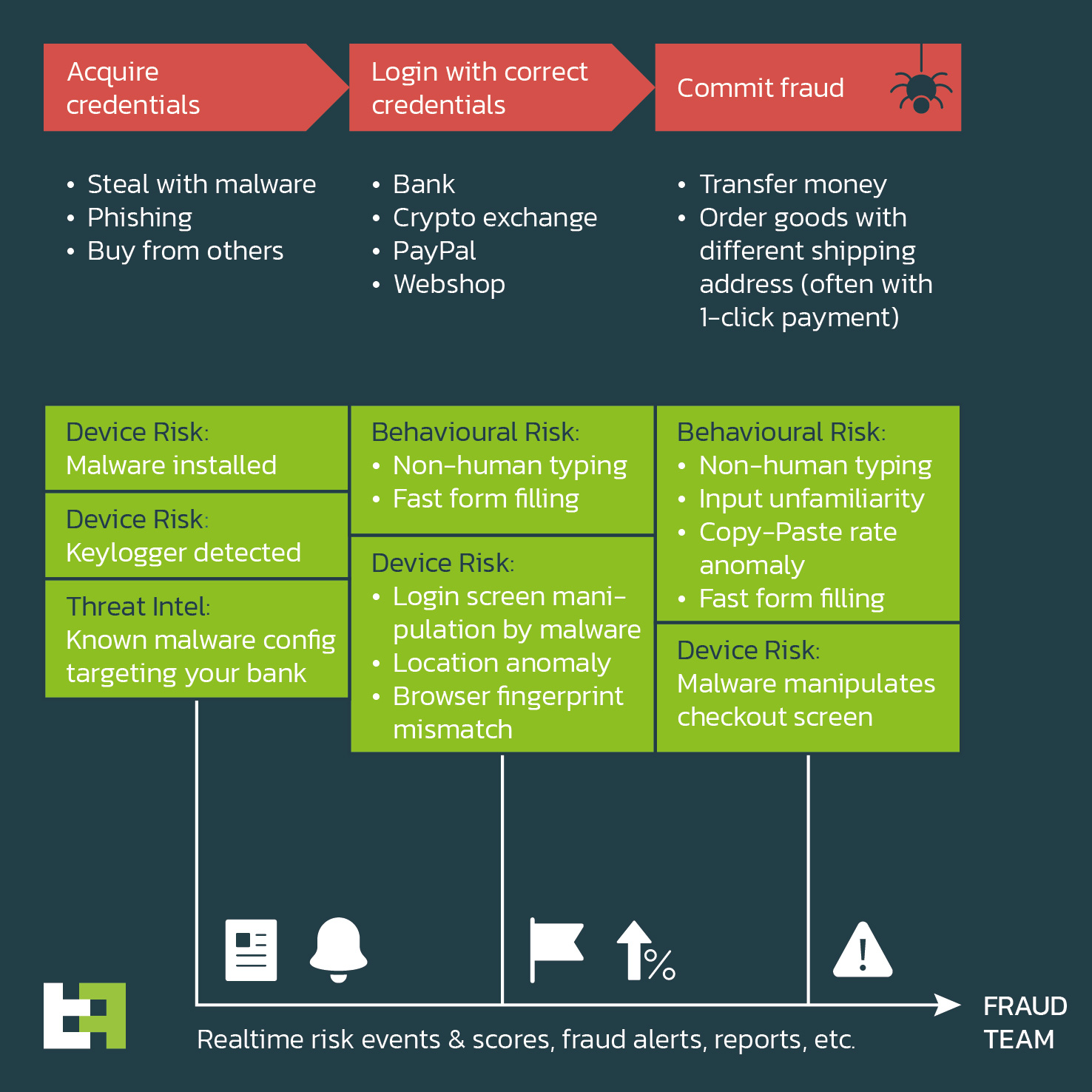
The hidden signals behind account takeover
Even when criminals possess valid credentials, they rarely behave exactly like the genuine customer. ATO attacks commonly introduce signals that often emerge long before fraudulent transactions occur:
How ThreatFabric detects account takeover
ThreatFabric combines Behavioural Analytics, Device Risk, supported by Mobile Threat Intelligence to identify when a session does not match the genuine customer.
Behavioural Analytics
Understanding the customer and the fraudster
At the core of the Fraud Risk Suite is the Identity Model, which learns how each individual customer normally interacts with web and mobile banking. Every session is continuously compared against that baseline to identify meaningful deviations.
Alongside this, a Fraudster Model is trained on confirmed fraud cases, allowing ThreatFabric to identify behavioural patterns commonly associated with account takeover, scams, and device compromise. Together, these models determine whether the user appears unlike themselves and increasingly similar to known fraud behaviour.

Device Risk
Adding critical context
Many account takeover attacks involve compromised devices. ThreatFabric Device Risk identifies indicators such as:
- Mobile malware
- Banking trojans
- Remote access tools
- Emulator usage
- Rooted or jailbroken devices
- Device compromise indicators
By correlating Device Risk with behavioural anomalies, organisations can detect attacks with greater confidence while reducing false positives.
Mobile Threat Intelligence
You can't fight what you can't see
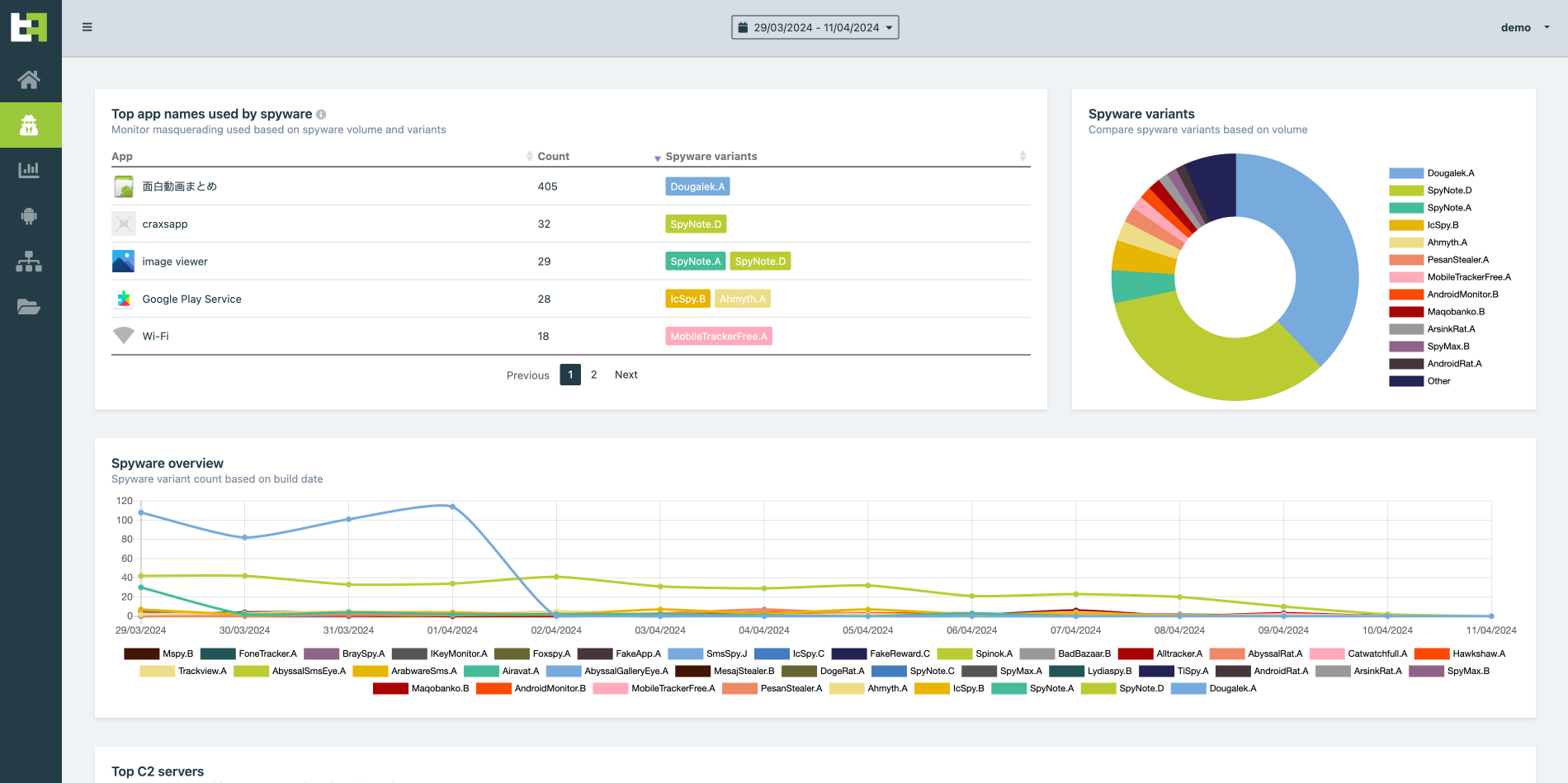
ThreatFabric's Mobile Threat Intelligence continuously tracks malware families, credential theft campaigns, fraud tooling, and emerging attack techniques targeting financial institutions. This intelligence provides additional context to both behavioural and device-based detections.
Why ThreatFabric is effective against account takeover
Focus on the complete fraud journey
ThreatFabric helps financial institutions:
- Detect account takeover even when credentials are valid
- Identify behavioural deviations at an individual customer level
- Recognise known fraudster behaviour patterns
- Detect malware-assisted account takeover
- Identify remote access tool abuse
- Combine behavioural and device-based risk signals
- Improve detection rates while reducing customer friction
- Protect both web and mobile banking journeys
Traditional systems ask: "Did the user authenticate successfully?"
ThreatFabric asks: "Is this really the customer?"
That distinction enables earlier detection, better protection, and fewer fraud losses.
Fraud Prevention Built On
Actionable Threat Intelligence
Learn how ThreatFabric's Fraud Risk Suite (FRS) can protect your organisation from fraud.