
Social Engineering
& Scams
Fraud that exploits people, not systems
Social engineering fraud is the fastest-growing fraud category worldwide. Whether it is an impersonation scam, investment scam, authorised push payment fraud, romance scam, business email compromise, invoice fraud, vishing, or smishing, the common factor is simple: the customer initiates a payment, and believes they are acting legitimately.
From a transactional perspective, everything appears legitimate. The question is not whether the customer is authenticated. The question is whether the customer is being manipulated.
The hidden signals behind scam activity
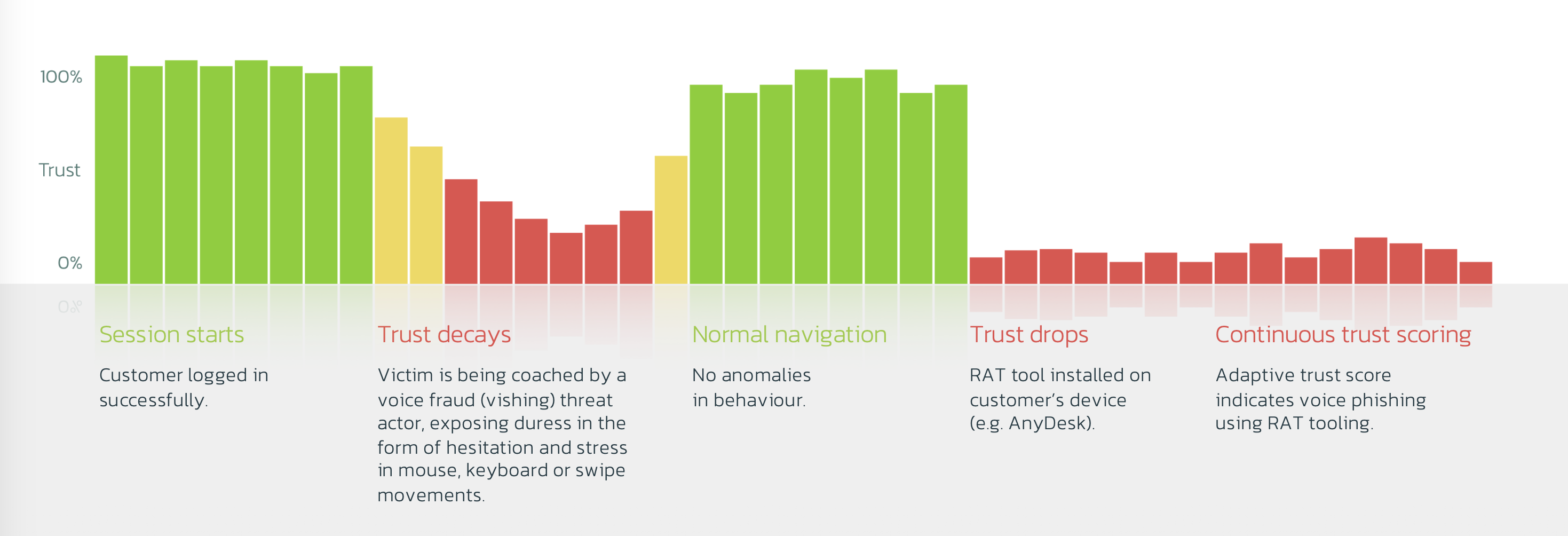
Scam typologies vary, and victims often display similar behavioural patterns during the attack. These signals appear before money leaves the account, creating an opportunity to intervene.
How ThreatFabric detects social engineering fraud
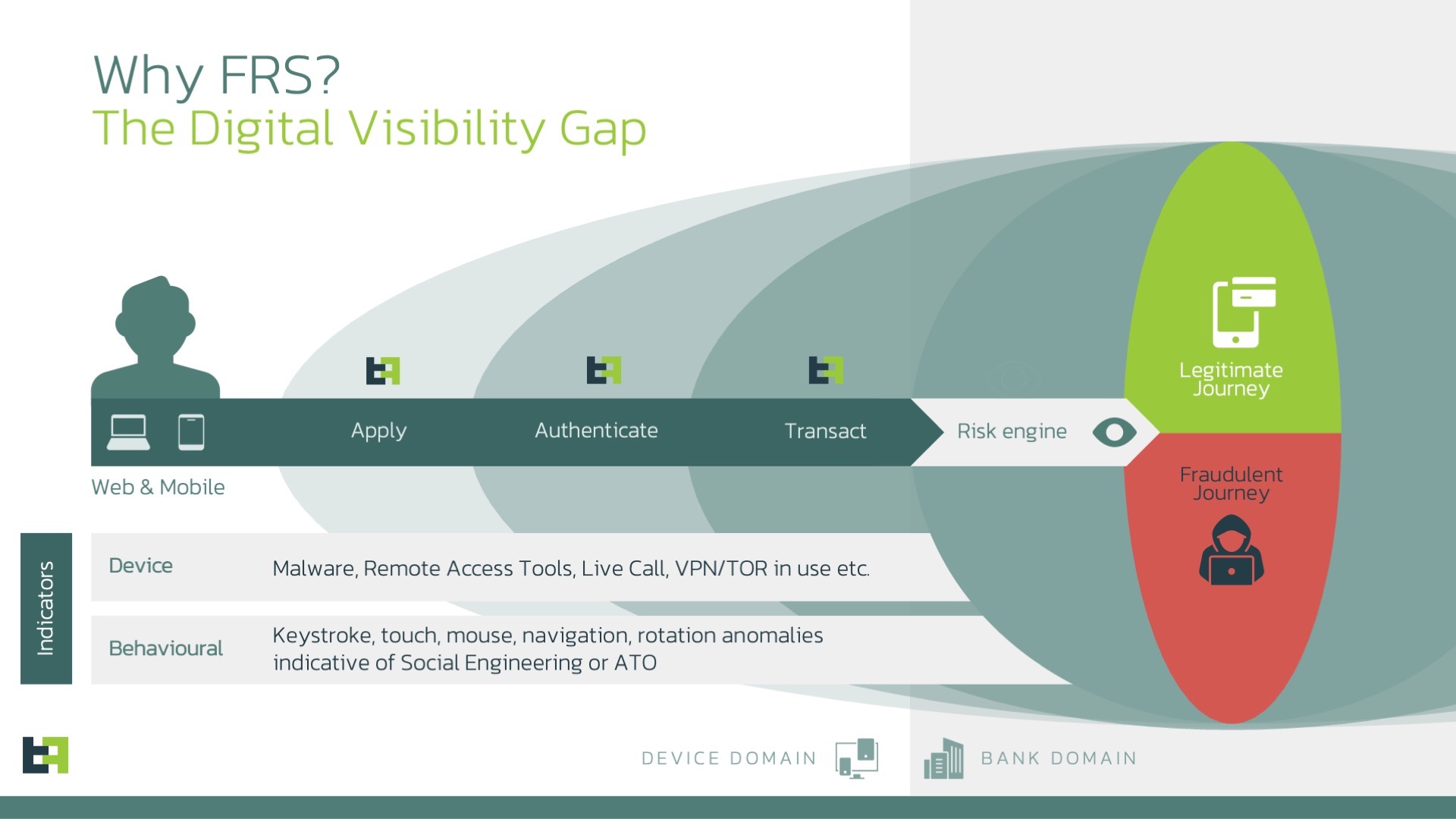
ThreatFabric detects scams by analysing the customer journey, before a transaction is authenticated. The Fraud Risk Suite (FRS) combines Behavioural Analytics, Device Risk, and Mobile Threat Intelligence to identify when a customer may be under manipulation, coaching, pressure, or duress. This defence-in-depth approach combines independent risk layers to provide a more complete view of fraud risk
Behavioural Analytics
Understanding the customer and the fraudster
At the core of our approach is the Identity Model, which learns how each customer normally interacts with digital banking channels. Every session is compared against that customer's established behavioural profile to identify meaningful deviations. The platform specifically evaluates whether customers are behaving as they normally would or whether behaviour suggests manipulation or coercion.
In parallel, a Fraudster Model is trained on confirmed fraud cases, allowing ThreatFabric to recognise behavioural patterns commonly associated with scams, social engineering, account takeover, and device takeover attacks.
Device Risk
Adding critical context
Modern scams increasingly involve remote access tools, malware, screen-sharing software, and compromised devices.
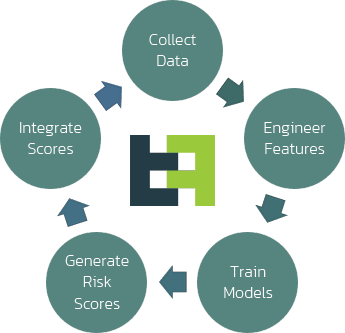
ThreatFabric enriches behavioural analysis with Device Risk intelligence, allowing fraud teams to correlate suspicious customer behaviour with indicators of device compromise. This significantly increases detection confidence while reducing unnecessary customer friction.
Mobile Threat Intelligence
You can't fight what you can't see
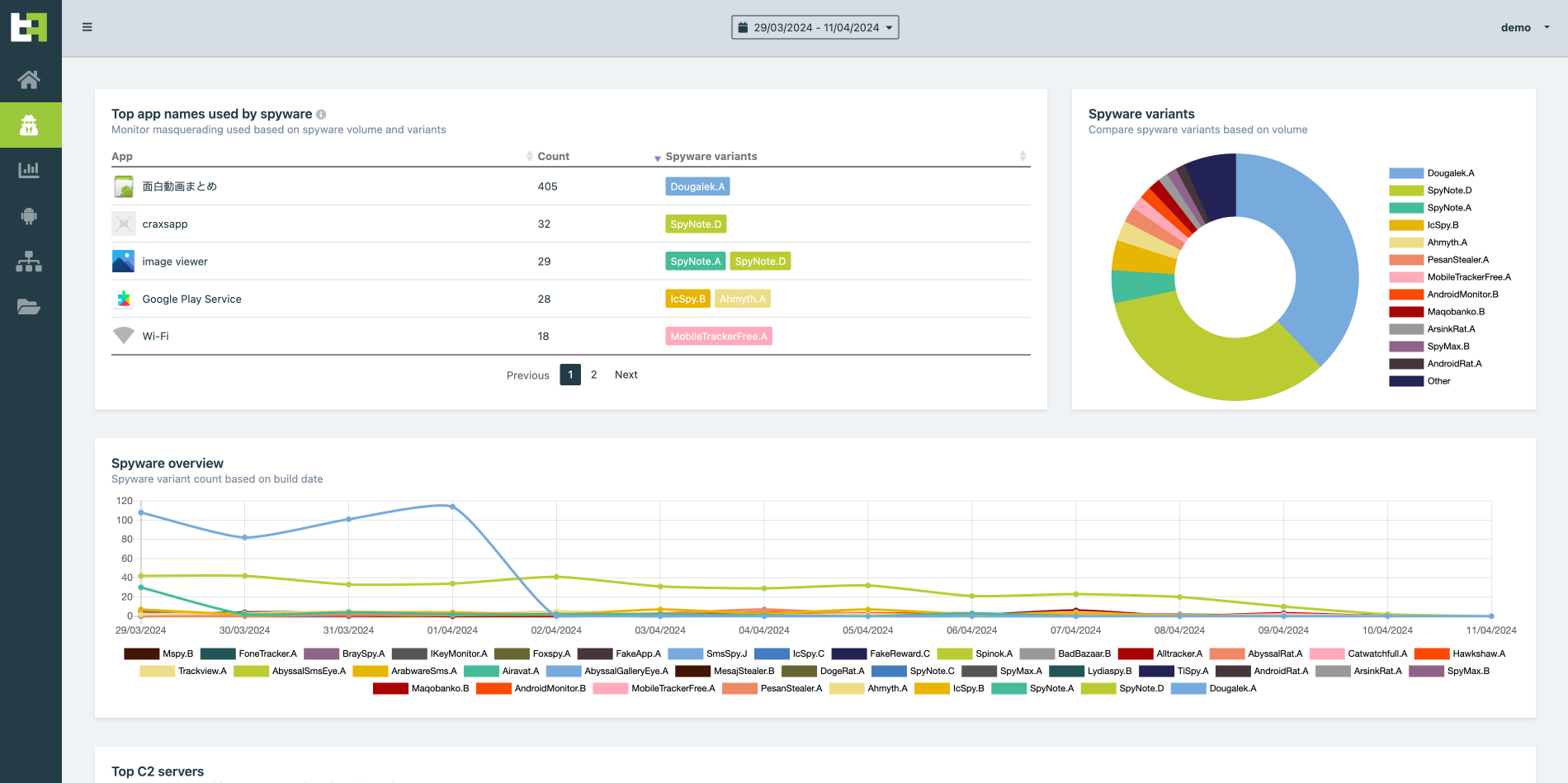
ThreatFabric's Mobile Threat Intelligence continuously tracks malware families, credential theft campaigns, fraud tooling, and emerging attack techniques targeting financial institutions. This intelligence provides additional context to both behavioural and device-based detections.
Why ThreatFabric is effective against Scams
Focus on the complete fraud journey
ThreatFabric is particularly effective against social engineering fraud because we focus on the complete fraud journey, not a single transaction. Our approach helps organisations:
-
Detect customer manipulation before payments are completed
-
Identify signs of coaching, duress, and social engineering
-
Recognise behavioural deviations at an individual customer level
-
Correlate behavioural anomalies with malware and device risk
-
Detect malware-assisted scams and hybrid fraud attacks
-
Improve fraud and scam detection rates while reducing false positives
-
Protect customers across both mobile and web banking channels
Traditional fraud systems ask: "Is this transaction legitimate?".
ThreatFabric asks a more important question: "Is this customer acting freely, or are they being manipulated?"
That distinction is the difference between detecting fraud after the loss and preventing it before it happens.
Fraud Prevention Built On
Actionable Threat Intelligence
Learn how ThreatFabric's Fraud Risk Suite (FRS) can protect your organisation from fraud.