
Bazuka: The Fraud Framework That Can Do It All
18 November 2026

In late October 2026, while investigating an incident involving an NFC card relay application, ThreatFabric's Mobile Threat Intelligence team encountered a new, previously unknown threat: Bazuka. The research unfolded a modular framework for fraudulent operations including LLM integration for victims' management and control.
In this article we explain the architecture of Bazuka framework, its capabilities and provide a sneak peek behind the curtains - control panel of the fraudulent tool.
Context
It all started with the investigation of yet another NFC-relay banking Trojan. With the exception of the RatOn case, where a remote access trojan downloaded an NFC relay application, NFC trojans generally have a fairly simple architecture: essentially, there are three components - a reader application, a card emulator application, and a server connecting them. The reader and card emulator applications typically share the same codebase. From an analysis perspective, researchers therefore only need to document a single application and possibly the control panel frontend, if one exists at all.
When we received the first Bazuka sample, this was exactly what we expected: a simple wrapper around yet another open-source project, perhaps with a custom network protocol added at most. However, Bazuka turned out to be an entire malware framework capable of carrying out a wide range of attacks, with the exception of automated payments. Moreover, the framework’s capabilities include LLM integration and ADB bridging - two technologies that arguably represent the cutting edge of mobile cyber threats.
During our research, we managed to uncover most of Bazuka’s components:
- Downloader/Dropper
- Core
- 23 modules
In Bazuka, we encountered an overlay technique we had not seen before: the trojan takes a screenshot of the home screen or lock screen and can display it as an overlay on command.
Key takeaways
- Bazuka is a full malware framework. A dropper/downloader, a core, and 23 modules cover overlays, keylogging, 2FA and SMS interception, remote control, and crypto-address swapping.
- ADB bridging is becoming standard in banking trojans. Bazuka might grant itself permissions covertly; we anticipate that malware in general might use it to deploy modules in a way that allows for surviving even if the host application is removed.
- LLMs are now part of the criminal toolkit. AI agents inside the control panel help operators pick out victims of interest and manage infections at scale.
- Distribution is built to scale, including intention to go via Google Play. Traffers lure victims with themes like adult content, while the dropper is configured with minimal permissions to potentially help it pass Google Play review.
Technical analysis
Distribution
During our analysis of the control panel, we found interface elements for creating accounts for traffers - cybercriminals responsible for attracting victims and getting them to download trojans.
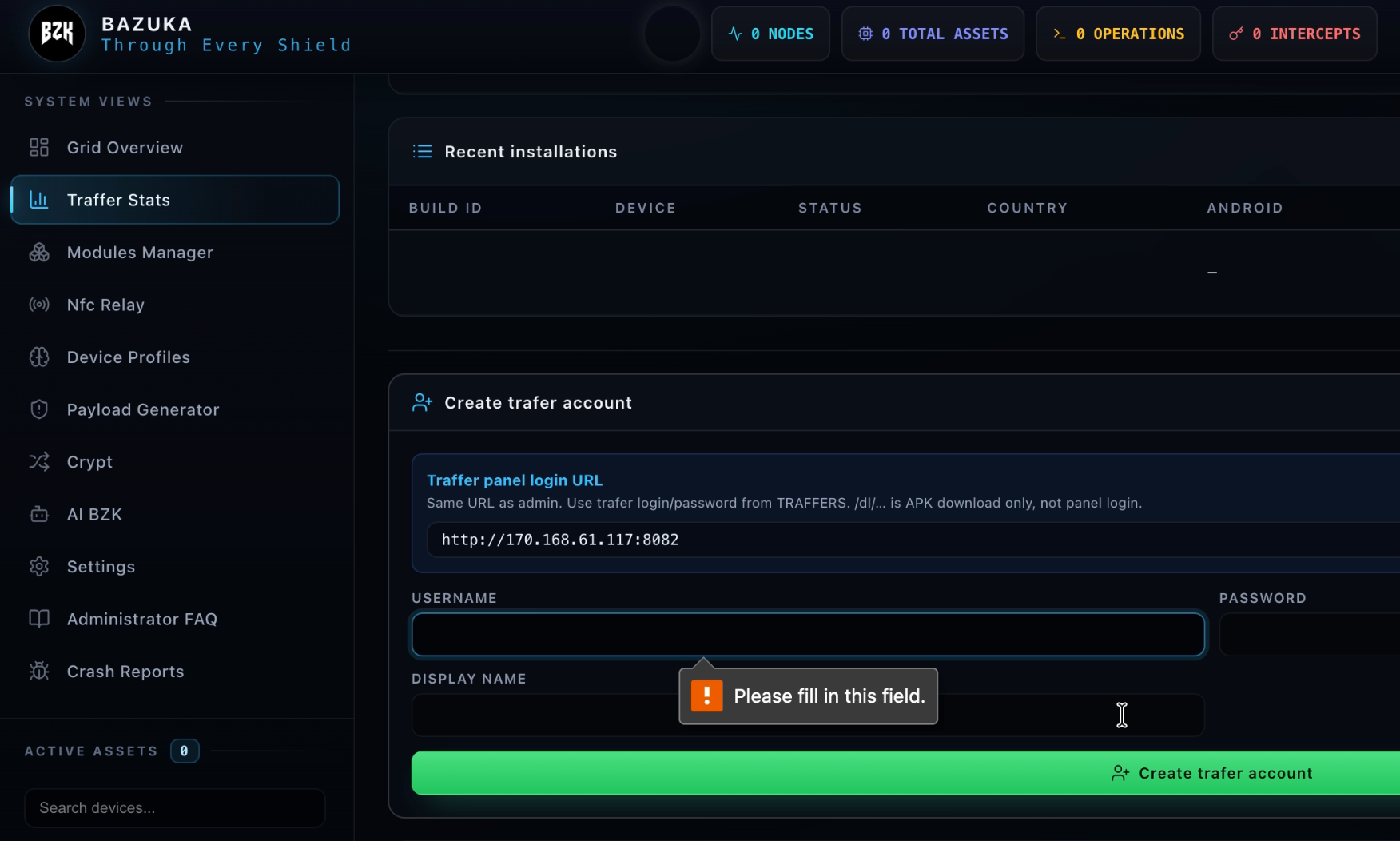
We also found dropper builder settings that specify minimal permissions in the manifest (without access to the Accessibility Services API).
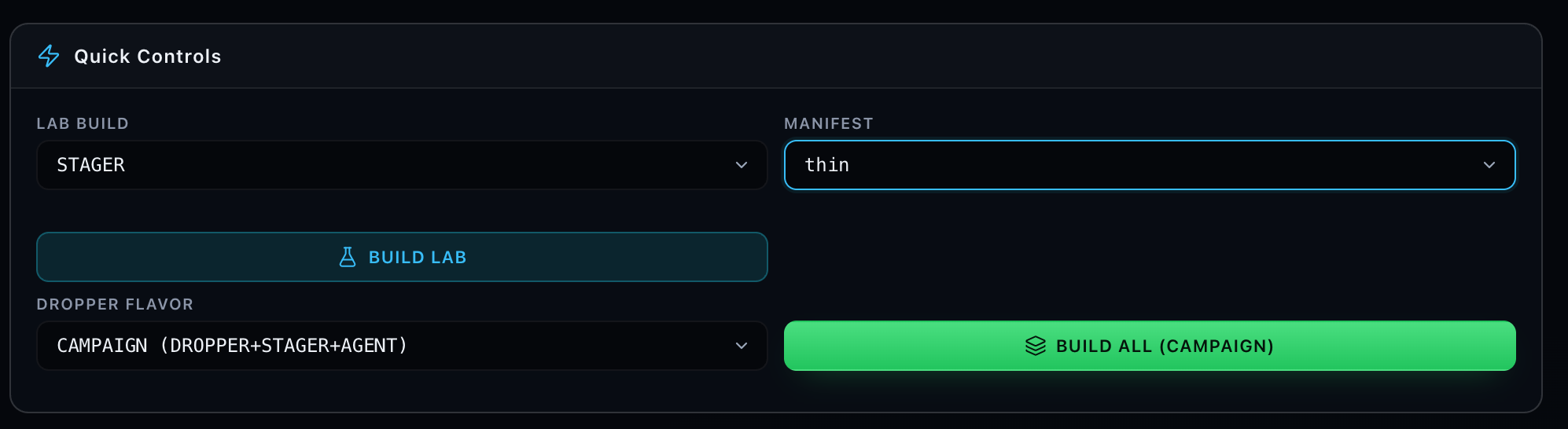
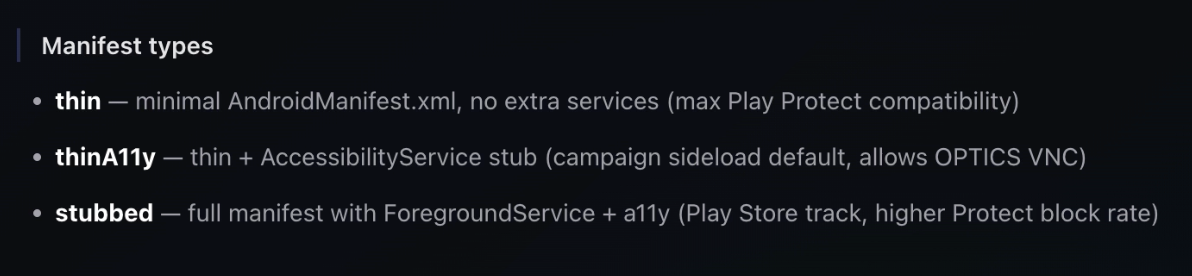
This is done specifically to make it easier for the resulting APK to (potentially) pass Google Play’s review process. This intention by the authors is proved by other parts of the control panel, while we have not seen any signs of it being a real case. In any way, this suggests at least two distribution channels:
- Through traffers, who create dedicated landing pages and attract victims under a particular pretext (like IPTV apps). Eager to access the promised content, victims eventually agree to download the file.
- Through Google Play. Traffers may also participate in this scheme to bring in more victims, but Google hosts the dropper. And, of course, installing the dropper this way is much easier than downloading it from a traffer’s website.
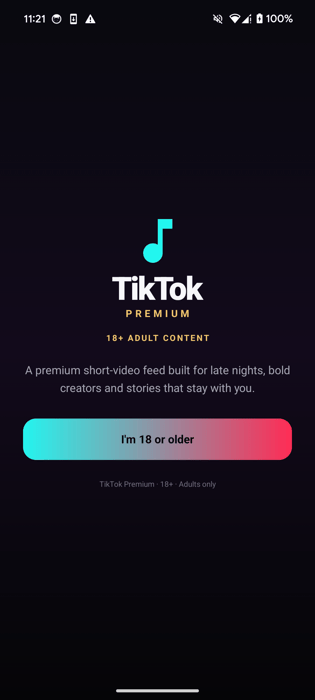
We were able to document the first distribution channel by finding a file on VirusTotal with the SHA256 hash f046b50166c8229b49839eeebcc7fd14bf3f198e4ec1bfde8a5b271e1407dec5. The original APK filename had helpfully been preserved during upload: TikTok18-Dropper-tiktok18-premium-1793332000-daf6efe2.apk.
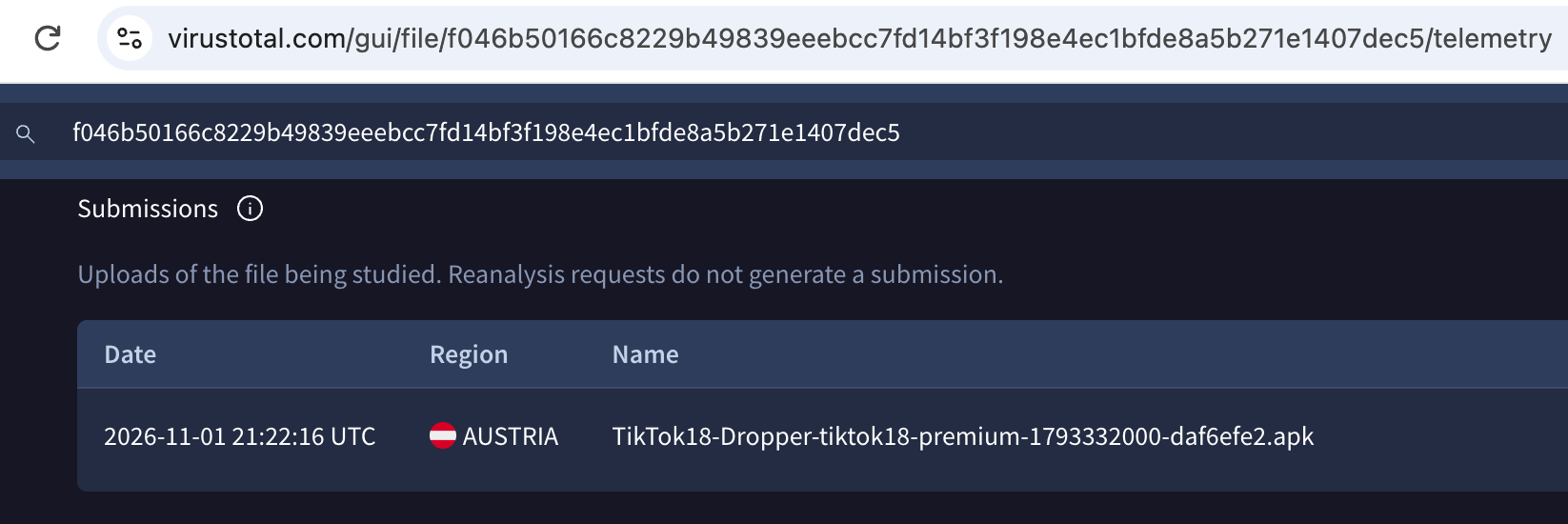
As the filename shows, the cybercriminals used adult content as a lure: TikTok18+ is currently a very common theme used by various groups.
We identified two variants of the Bazuka framework’s modus operandi:
- A dropper (SHA256: f046b50166c8229b49839eeebcc7fd14bf3f198e4ec1bfde8a5b271e1407dec5) downloaded the next stage, which was a separate APK.
- A downloader (SHA256: 4d572669d6000304a692874c1583021dfdb4f2f113ea487e470f7e4c486e503a) directly downloaded the payload core.
At the first stage, the victim interacts with either a dropper or a downloader.
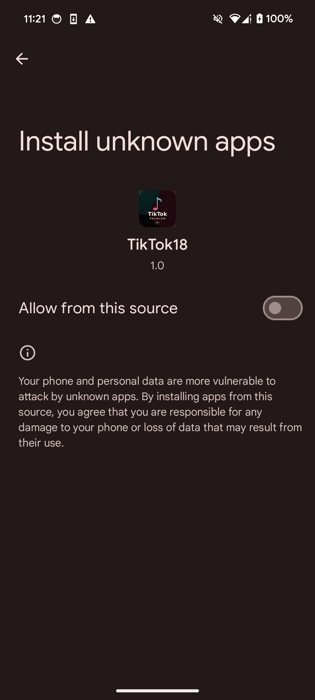
The dropper asks the victim for permission to install applications from third-party sources, then downloads and installs an APK through the PackageManager session mechanism. In the dropper’s code, the APK being installed is referred to as the stager, and the package launched by the dropper is named com.tiktok.premium.pro.
We were unable to obtain the stager at the time of our research.
We suspect that the stager may be similar to the downloader in our possession (SHA256: 4d572669d6000304a692874c1583021dfdb4f2f113ea487e470f7e4c486e503a).
Its purpose is to download the core and whichever modules are immediately needed for a particular campaign. In the case of 4d572669d6000304a692874c1583021dfdb4f2f113ea487e470f7e4c486e503a, the core and the tapread-nfc_module module were downloaded automatically, as this was an NFC relay attack.
At the second stage, the core and modules are downloaded and launched. Both the core and the modules are DEX files, which the stager loads using InMemoryDexClassLoader. In the case of 4d572669d6000304a692874c1583021dfdb4f2f113ea487e470f7e4c486e503a, the stager downloads the core and loads the following classes from it:
- com.support.assistant.network.DualWebSocketManager. Calls its connect method.
- com.support.assistant.network.WireSessionManager. Calls its setOverrides method, passing two identifiers: 7e8f8f2be55855a86ee120382fa4cbdd851f958a06543da80fffa424b89555df and 14e263bd957d.
- com.support.assistant.network.ModuleLoader. Calls its loadModule method with nfc_module and a URL for the NFC module, hardcoded in the stager, as arguments.
At the third stage, the core starts and establishes a connection to the server. It collects extensive information about the device and sends it to the server, then waits for commands from the command-and-control server.
At the fourth stage, additional modules are downloaded.
Once the core and required modules are loaded, Bazuka operates as a keylogger and a classic overlay trojan, monitoring the text entered by the victim and displaying an overlay at the right moment. All functionality is controlled by commands from C2.
Framework full structure
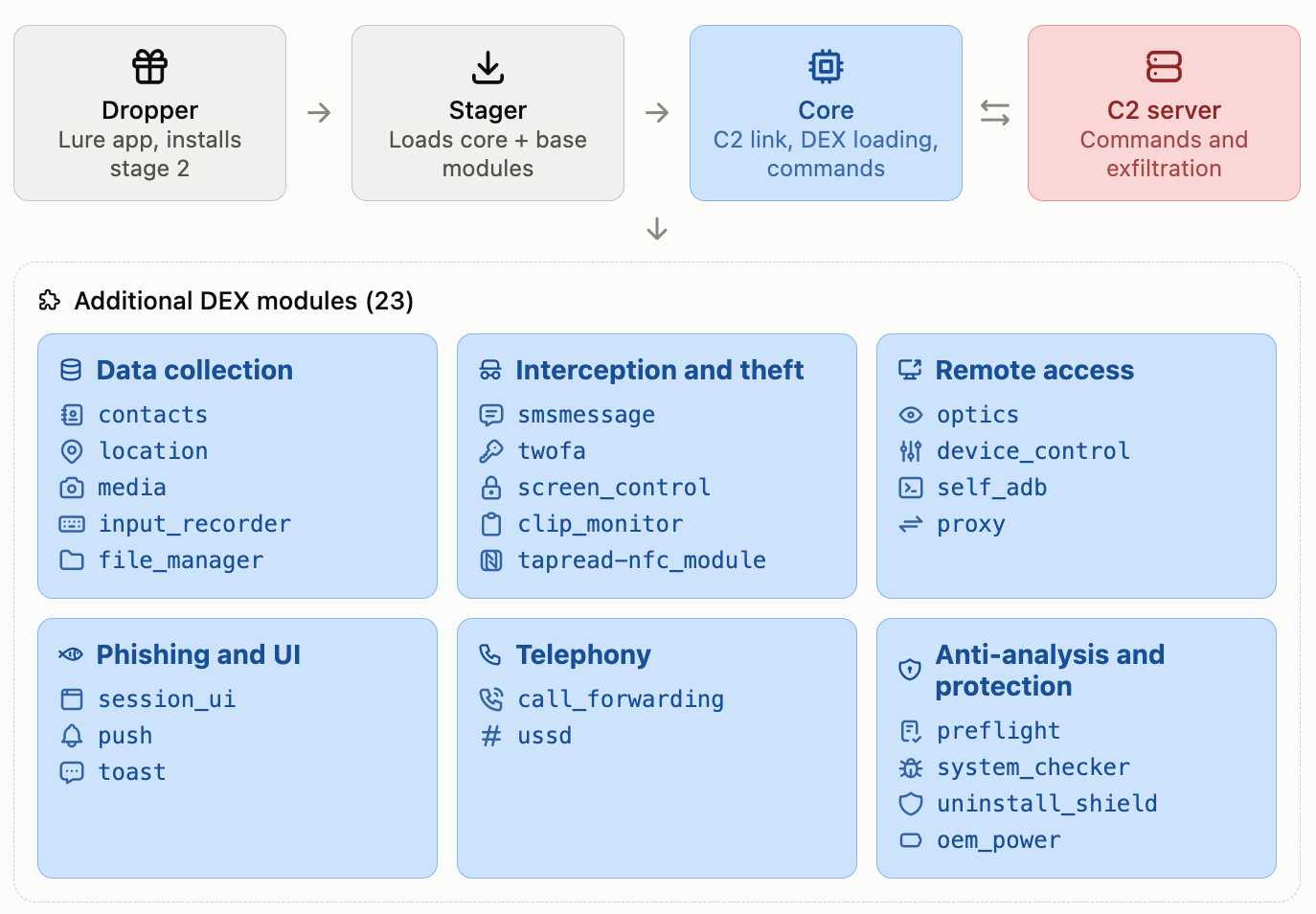
The Core
Bazuka’s core maintains communication with C2, loads additional DEX modules, dispatches commands and system events, collects device information, and manages permission acquisition and component updates.
The core performs a quick assessment of the device’s threat level using information from the Build class, sensor queries, the presence of a debugger or security solutions, and battery status.
Curiously, the check for security solutions relies on the presence of packages that are no longer available on Google Play.
A more detailed assessment is performed within the system_checker module.
The core requests permissions itself and grants them automatically in two ways:
- Through Accessibility.
- Through ADB shell commands.
Important components of the core include mechanisms for enabling Wireless Debugging and completing the pairing process. The core can open the system settings screen, find the relevant menu, enable Developer options, and then enable Wireless Debugging. When this mode is enabled, it also intercepts the PIN, which is then used to establish a TLS connection to the ADB daemon.
The core can counter detection by Google Play. It disables the protection component through Accessibility.
The core contains an overlay mechanism used to obtain permissions and access to the Accessibility API. Accessibility access is obtained in the following ways:
- By starting an activity with the android.settings.ACCESSIBILITY_SETTINGS intent and flags set to 268435456.
- By attempting to modify the enabled_accessibility_services secure setting.
- Through the self_adb module using the rebind_accessibility command.
- Through the downloader/dropper by sending the com.guidocool.cryptomanager.action.A11Y_REBIND broadcast.
The core supports device profiles downloaded from C2. These profiles change the behavior of the automated tapping used to obtain permissions.
Interestingly, the core searches for interface elements in Russian, English, Chinese, and Japanese.
The core communicates with C2 over two WebSocket channels: Control and Data. Frames are encrypted using ChaCha20-Poly1305. Encryption keys are rotated, stored locally in SharedPreferences, and sent separately to C2 as telemetry.
The Control channel carries commands, while the Data channel is used for data exfiltration, including screen capture streams from the optics module.
After opening the Control socket, the bot sends a large block of device information, including ThreatLevel, allowing the operator to assess how attractive the victim is as a target within seconds of the bot starting.
The core implements a self-destruct mechanism that clears local storage and deletes the database. It also disables the application completely using setApplicationEnabledSetting(packageName, 3, 1);.
The core can carry out attacks on its own: its code includes a mechanism for collecting notifications from messaging and 2FA applications. However, in most cases, malicious functionality is spread across modules. For example, the core includes a mechanism for processing clipboard contents using getPrimaryClip, but the intercepted data is still forwarded to the clip_monitor module.
The core handles both its own commands and commands for modules. Commands are placed in queues according to priority, with the highest priority commands executed first. For example, enableUninstallProtection has the highest priority.
The core can download and load modules, and also exposes methods used by those modules. It acts as a proxy between modules and forwards C2 commands to them. The ModuleLoader component downloads a DEX file and passes it to InMemoryDexClassLoader. In this flow, the module is loaded directly from a byte array, without first saving the DEX to a file. Through the core’s HostBridge component, a module gains access to the Accessibility service, network functions, shared storage, the result of the MediaProjection permission request, and calls to other modules. Events returned by modules are received by ModuleEventRelay, which selects the channel and format for transmission.
Modules
| Module | Description |
|
call_forwarding |
Manages call forwarding through USSD commands |
|
clip_monitor |
Spoofs cryptocurrency wallet addresses in the clipboard. It detects BTC, ETH, TRC20, and SOL addresses and replaces them with specified addresses. |
|
contacts |
Retrieves the victim’s contact list, including names and phone numbers. |
| device_control |
Manages the device. Many of its commands use the ADB bridge and are executed as shell commands. |
| file_manager |
Provides access to the file system. |
| input_recorder |
This module is a keylogger. It uses regular expressions to identify bank card numbers, wallet addresses, and passwords in user input. It also captures all entered text when a target application is in the foreground. |
| location | Determines the victim’s location using GPS, cell tower positioning, and Wi-Fi. |
| media | Captures photos and streams camera video and microphone audio. |
| oem_power | Opens system and OEM settings for power saving, background operation, and autostart. |
| optics | This module is responsible for remote control, screencasting, and phishing overlays. |
| preflight | Performs preliminary checks of the runtime environment. |
| proxy | Implements a reverse TCP proxy, allowing an infected device to act as an intermediary for network connections. |
| push | Creates and manages local Android notifications. |
| screen_control | Captures the lock screen PIN, text password, and unlock pattern through Accessibility. |
| self_adb | Implements an embedded ADB client. |
| session_ui | Displays phishing HTML overlays. |
| smsmessage | This module handles SMS: it reads stored messages, monitors incoming messages, extracts potential verification codes, sends SMS messages, and attempts to delete messages from the device. |
| system_checker | This module checks the runtime environment and implements anti-analysis measures. |
| tapread-nfc_module | Interacts with contactless bank cards. |
| toast | Displays text messages on the device’s screen. |
| twofa | Captures one-time verification codes. |
| uninstall_shield | The module counters attempts to uninstall or force-stop the application. |
| ussd | This module sends USSD requests from the victim’s device and receives responses from the mobile operator. |
Backend analysis
During our investigation, we found that the server addresses hardcoded in the samples pointed to Cloudflare. Subdomains of brokerok[.]org were embedded both in the trojan’s code and in the certificate bundled with the downloader:
- c2ws.brokerok[.]org
- c2data.brokerok[.]org
- c2proxy.brokerok[.]org
- c2api.brokerok[.]org
The domain name is curious: “brokerok” could be a combination of “broker” and “OK,” or an affectionate diminutive of the Russian word “брокер” (“broker”).
Overall, this was already enough to analyze the control panel, but we wanted to make sure there were no other servers beyond those behind Cloudflare.
There turned out to be two more servers:
- 95.181.213[.]21 — this server was located in Moscow and hosted by ONE DASH VPS hosting. Curiously, publicly available sources pointed to a different organization: LLC VEKTOR AITI TEKHNOLOGII. As it turned out, this company was undergoing bankruptcy proceedings while also owning the One Dash trademark. VEKTOR AITI TEKHNOLOGII and ONE DASH shared the same director.
- 170.168.61[.]117, gargona[.]cash — this server was located in Amsterdam, the Netherlands, and hosted by a different provider, GTHost.
This address was embedded in the certificate bundled with the dropper f046b50166c8229b49839eeebcc7fd14bf3f198e4ec1bfde8a5b271e1407dec5.
At the time of our research, 95.181.213.21 was already offline, while 170.168.61.117 was operational and responding to requests.
Server port configuration:
|
Port |
Service |
|
8082 |
Control panel over HTTP |
|
8445 |
Control panel over HTTPS |
|
8443 |
Bot C2 |
|
8444 |
Bot C2 data channel |
The control panel consists of a frontend (HTML, CSS, and JavaScript) and a backend. The panel itself states that the backend is based on Node.js, but we were unable to verify this: the server’s response headers contain no telltale signs of Node.js.
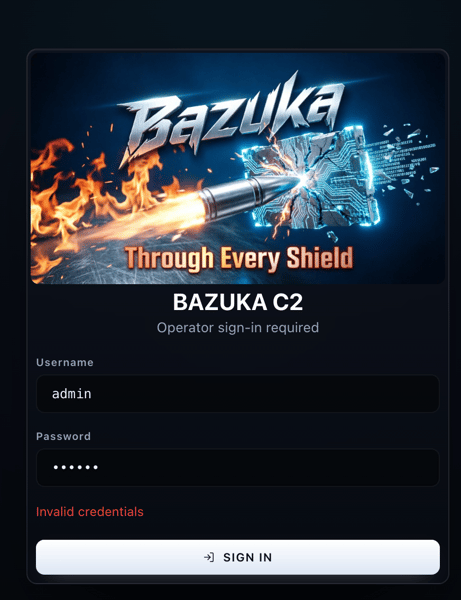
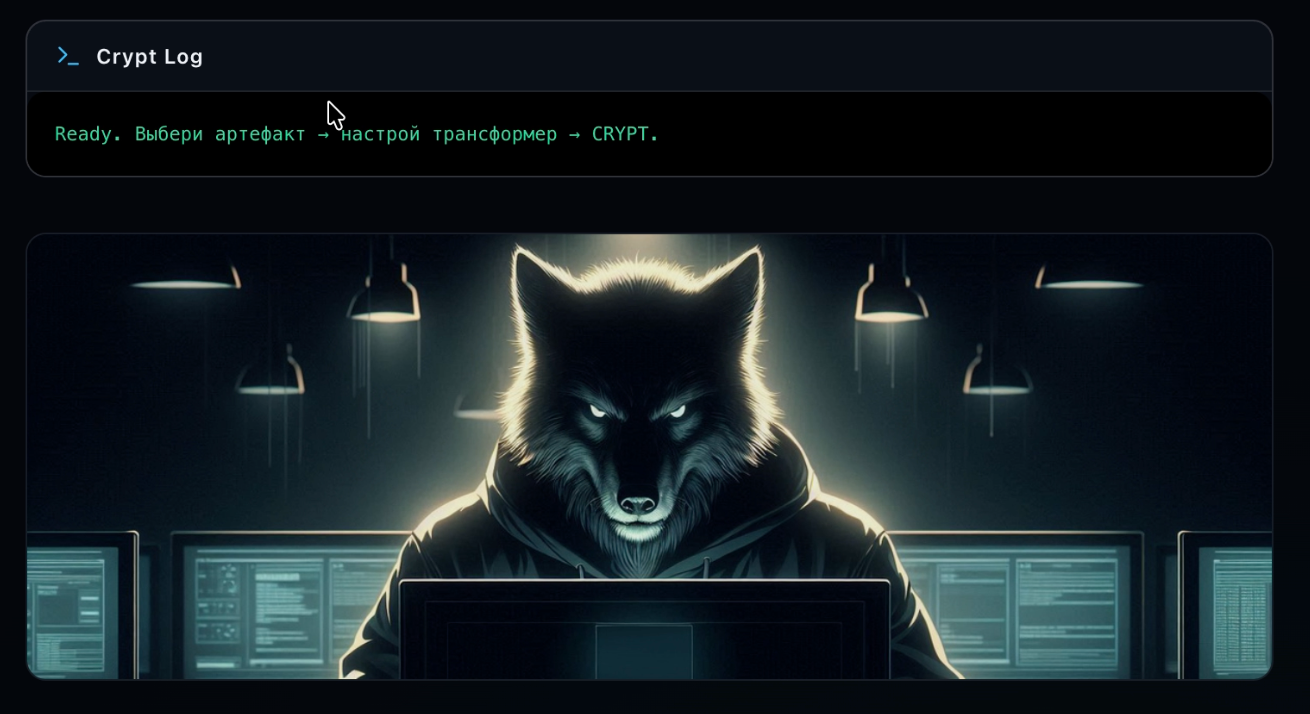
The panel is full of images and videos generated by AI.
It was not fully translated to English– some UI elements were still on Russian.
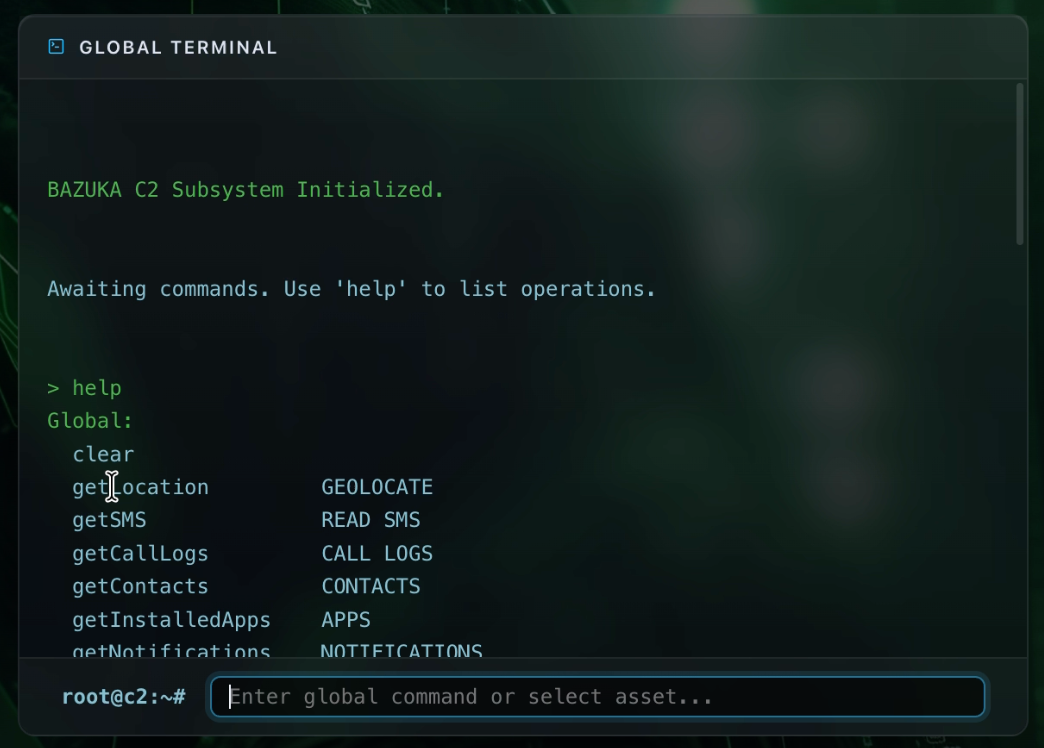
Perhaps its most unusual feature is a console that allows various commands to be executed through the bot.
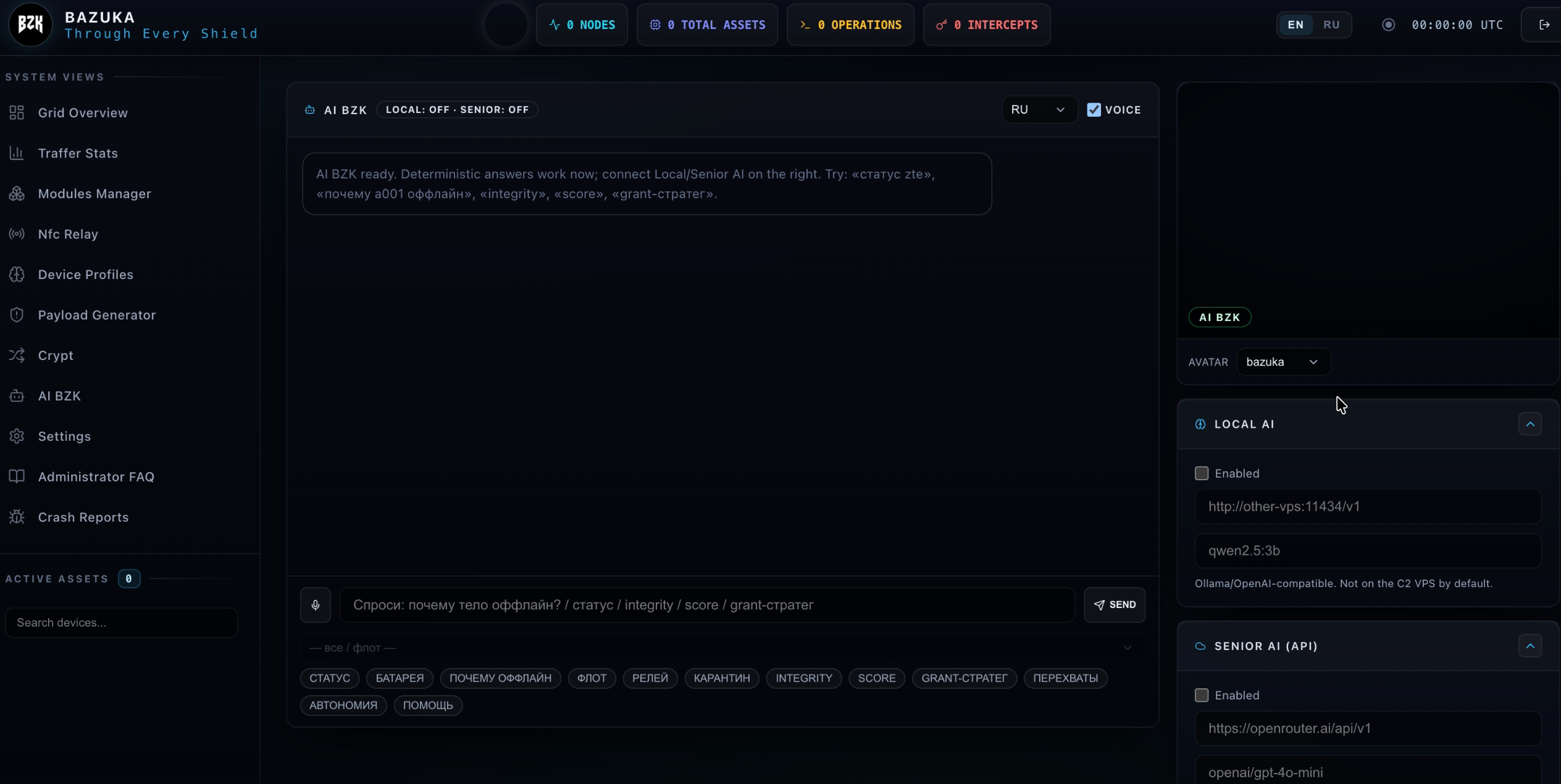
An interesting section of the control panel is its integration with language models. It supports both locally hosted models (running on a neighboring server) and large models accessed through an API. Interestingly, one of the sample prompts was “Спроси: почему тело оффлайн? / статус / integrity / score / grant-стратег” (“Ask: why is the body offline? / status / integrity / score / grant strategist”). The text is in Russian and includes the slang term “тело” (“body”). The example also shows that the operator can request a score, indicating how attractive the victim is as an attack target. There is also an option to obtain a strategy for clicking through permission prompts.
There is, however, one detail that comes up quite often in the world of financial crime.
All of the panel’s code is accessible without authentication, meaning that anyone can examine the capabilities available to the bot operator in considerable detail simply by visiting the frontend website. This is not the first time we have encountered this, and it gives the impression that cybercriminals are becoming less concerned about researchers being able to easily uncover the panel’s functionality. What matters is that access to victim data remains protected by authentication on the backend.
Nevertheless, it would be more reasonable to regard this as a misconfiguration and a lack of professionalism on the developer’s part.
Conclusions
In Bazuka’s case, the cybercriminals put considerable effort into developing the framework, even accounting for the likely use of LLMs. And since we are already seeing the first attempts to use it in the wild, the product has found a buyer. On the other hand, despite its many modules and functions, Bazuka differs little from other modern threats in terms of capabilities. But one thing can be said with confidence: ADB bridging is becoming a standard feature of modern banking trojans. While it is not there yet for Bazuka and its current architecture, this is a very concerning sign, as it allows a malware to obtain various privileges covertly and deploy independent modules that can survive removal of the host application. Another equally concerning feature is the use of LLM chats directly within the control panel. AI agents are used to identify victims of interest.
It was somewhat surprising to see that the framework’s modules, as well as the dropper, were unobfuscated, despite references to hardening in the control panel. Either the buyer did not use it, or the feature is unfinished. And perhaps the most amusing part was once again seeing a completely exposed control panel frontend—a sign that the developers of web components for mobile threats still have little understanding of basic computer security principles. Although the backend remained protected by authentication, some APIs still returned results when they should not have.
Appendix
File hashes
Dropper/Downloader
4d572669d6000304a692874c1583021dfdb4f2f113ea487e470f7e4c486e503a
f046b50166c8229b49839eeebcc7fd14bf3f198e4ec1bfde8a5b271e1407dec5
The Core
3cb8711a51331123247476eef768c435d6286a21cd8ac5479a6276349632c82b
Modules
|
Module name |
SHA256 Hash |
|
call_forwarding.dex |
c08a5f3df1693b03540db8c6c001b5e7f98ea6121ad4aca9c6904c798f4f4635 |
|
clip_monitor.dex |
84849921d229c4e6c1a43af86582bff7560e938e96ad8b01b0ff13dafe559757 |
|
contacts.dex |
ffc35c48d8a5cb1ee3e5bdc80e0df3e8509e8dd840edd0b9fb0ff5d5880834d0 |
|
device_control.dex |
3da80bbcf6c6e7ff117db4cdfe1422375ecf1db97b61574359f97a1da43566ae |
|
file_manager.dex |
7361a1ad372367dfc11421385632586da4aaf164c41f67e0acb2ccdb7931e3c1 |
|
input_recorder.dex |
910911b7d1be3f67c926067e923ba86be6100366e52f0fe30484176353bf1701 |
|
location.dex |
38bf5b694512cf14620edc0af700c08e7570fa5a20b4c3c052c7fe8823b2ec5f |
|
media.dex |
b97b3ca1fdce56ae41418b287ca0e97d93ea16ec7b9182bdde459bba8b09f661 |
|
oem_power.dex |
d0fc542db2602d3a881c825c4d58e5ae34db054496d64c9185a84dceab30a850 |
|
optics.dex |
5cf38406fbed48fe110bcf1e84314429e1f649a2539c00b78216a5808fb53aa0 |
|
preflight.dex |
de97f4864e94eb9fecd018d51c36fc0a2e0d3a67e9bb83ab0e5ac29ad101f292 |
|
proxy.dex |
b7987e06d515fa06751a014a034b680f5a2c185bf0eb1fcf76c29b8626527d53 |
|
push.dex |
2cc693857f47758e974c3ee928a4fe0fdba444b7efe5a284dcfc0d3b47429275 |
|
screen_control.dex |
4dcad3a1547c72d08ccb86dc393e14935c7f06ebe3ca63ba30e51b98ab4930e1 |
|
self_adb.dex |
1c29e14001edcfc548e1ae43572aa17f91ad89ce09a0e9028737077d7af97d30 |
|
session_ui.dex |
d0ba986440b06c4b587690acd3e594cc674c82408cd4f5c59c7f6675a2b4d9c0 |
|
smsmessage.dex |
0785f8ca820ccfb62be61ac4bd55fd5295a771cab9e4cd91fc4eb1e3c43af3db |
|
system_checker.dex |
ac57a003ad4464ac357ae78e8e4eb24aae9d8442545129f82ad683efa1b2ad99 |
|
tapread-nfc_module.dex |
5be63e04a98988d8d15d12cdf2af8cd6b1b6b8681e511587bb1a22ebcb32583f |
|
toast.dex |
ac34c61cb7368ba4409311a7492bf14316e1cee1f2984955005915d6ec7336f3 |
|
twofa.dex |
c181d5c6c098f9f4ac6b10e4b1d69a0278bb3e07f260d0013244113c8504f39a |
|
uninstall_shield.dex |
adf9a4689e4c178a8c8fedef5e0bdf7be6ab443264125efabfadd8e1594bd471 |
|
ussd.dex |
8ee9d88db8874662c7743bb0f7d06e852c372b2bdb1846a12afb71a62b8f0a7b |